
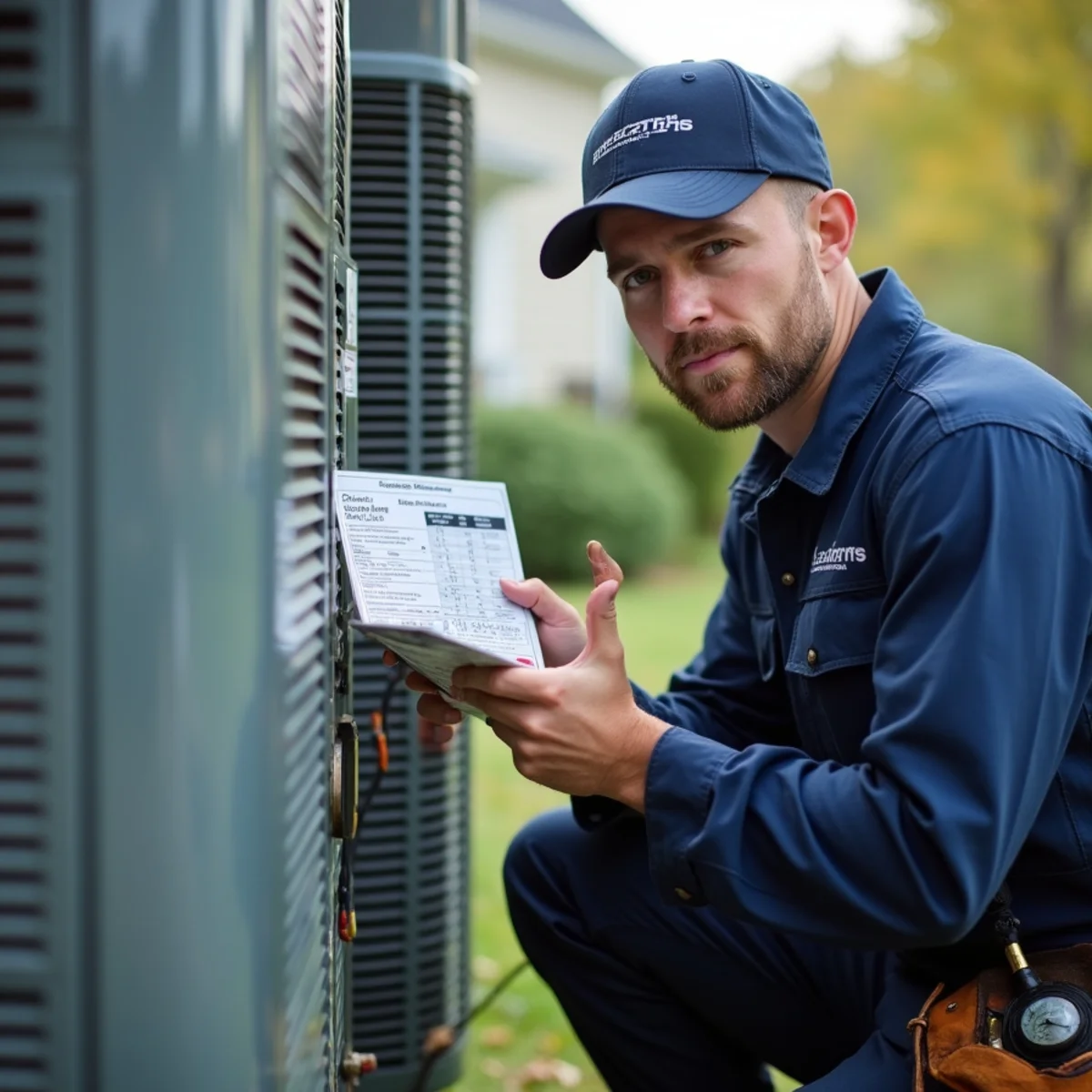
If your air conditioner was installed prior to 2010, it almost certainly uses R-22 Freon, which was completely banned from production and importation in 2020. Recharging an R-22 system can cost $150 to $250+ per pound. If an R-22 system has a significant refrigerant leak, spending $1,000+ on obsolete refrigerant is poor economics — replacement with a modern system is strongly advised. For R-410A systems under 12 years old, repairing the leak and recharging remains a viable, cost-effective option.
The R-22 Freon ban: why a simple recharge is no longer simple or economical
Under the Clean Air Act, Montreal Protocol, and EPA Phaseout schedule, the production and importation of virgin R-22 (hydrochlorofluorocarbon or HCFC-22) was permanently banned on January 1, 2020. Because virgin gas cannot be manufactured, the only legal R-22 available in Maryland comes from strictly reclaimed and recycled stockpiles.
As supplies diminish, wholesale costs have escalated dramatically. Today, recharging an older residential cooling system with R-22 costs anywhere from $150 to $250+ per pound. Given that a typical 3-ton to 4-ton central air conditioner holds 6 to 12 pounds of refrigerant, a complete recharge can easily cost $1,200 to $2,000 in refrigerant alone—before technician labor, leak detection, or mechanical brazing repairs are factored in.
Pumping expensive R-22 into a 15-to-20-year-old system with corroding evaporator coils is financially reckless. Unless the pinhole leak is located, isolated, and permanently brazed, that costly refrigerant will simply leak into the atmosphere before the end of the summer, leaving you back at square one.
The $5,000 Rule: calculating whether repair or replacement makes financial sense
Professional HVAC technicians and financial advisors use the industry-standard "$5,000 Rule" to give homeowners an objective, math-based framework when facing large air conditioning repairs:
How to apply the $5,000 Rule to your cooling system:
- Multiply the Age of the Unit (in years) by the Quoted Repair Estimate (in dollars).
- If the result exceeds $5,000, replacement is strongly recommended. For example: a 14-year-old R-22 system needing a $650 coil repair and recharge gives 14 × $650 = $9,100, heavily favoring replacement.
- If the result is well below $5,000 (such as an 8-year-old R-410A unit needing a $280 capacitor replacement: 8 × $280 = $2,240), proceeding with the repair is sensible and economical.
- Factor in warranty status: If key components like the scroll compressor or coil are still protected under a 10-year manufacturer parts warranty, repair is frequently justified.
The R-410A phasedown under the AIM Act: what Harford County homeowners must know
Homeowners with systems installed between 2010 and 2024 have R-410A (Puron) equipment. Under the federal American Innovation and Manufacturing (AIM) Act of 2020, the EPA is executing an 85% phasedown of hydrofluorocarbons (HFCs) by 2036 due to their high Global Warming Potential (GWP).
It is crucial to understand that R-410A is NOT being banned from existing systems. You are NOT required to replace a well-functioning R-410A air conditioner or heat pump. Production of virgin R-410A equipment for new construction and replacement ended on January 1, 2025, but certified technicians will have legal access to reclaimed and stockpiled R-410A to service, repair, and recharge existing units for the next 15 to 20 years.
If your R-410A system is less than 10 to 12 years old and develops a minor service valve leak or loose flare fitting, repairing the leak and adding 1 to 2 pounds of R-410A remains an affordable, straightforward repair.
The arrival of low-GWP A2L refrigerants (R-454B and R-32): what changes for new installations
New central air conditioners and heat pumps installed in Maryland now utilize next-generation A2L mildly flammable refrigerants, primarily R-454B (Opteon XL41) and R-32. These refrigerants cut GWP by over 75% compared to R-410A while providing exceptional thermal thermodynamic efficiency.
Because A2L refrigerants carry an ASHRAE classification for mild flammability, new equipment features factory-installed refrigerant leak detection sensors (RDS), active mitigation relays that activate the indoor blower fan if vapor is detected, and spark-free electrical contactors. Technicians must be specifically certified in A2L handling, recovery procedures, and nitrogen purge brazing techniques.
Leak detection methods: electronic sniffers, ultraviolet dye, and nitrogen isolation testing
Before spending money on any refrigerant recharge, identifying the exact origin of the loss is mandatory. Bynum Run Air Experts uses a structured three-tier diagnostic protocol across Harford County:
Professional refrigerant leak diagnostic protocols:
- Heated Diode Electronic Sniffer: High-sensitivity electronic sensors detect halogen emissions down to 0.1 ounces per year along service valves, filter driers, and copper line brazes.
- Fluorescent UV Spectroline Dye: Injected into the system with POE oil, circulating through the refrigeration circuit and glowing bright neon under ultraviolet inspection lights where seepage occurs.
- High-Pressure Nitrogen Isolation Testing: When coils are buried inside damp air handlers, the system is evacuated, isolated into sections, and pressurized with dry nitrogen to 350+ PSI to confirm pressure drop over a 30-minute test window.
Frequently Asked Questions
Quick answers based on Harford County equipment and climate realities.
Can a technician just put R-410A into an R-22 air conditioner?
No, absolutely not. R-410A operates at nearly 60% higher operating pressures than R-22 and requires synthetic polyolester (POE) oil rather than mineral oil. Mixing refrigerants will instantly destroy the compressor, cause chemical sludge, and poses a serious mechanical rupture hazard.
How much does R-22 Freon cost per pound in Maryland today?
Because virgin R-22 was permanently banned from production in 2020, reclaimed R-22 currently costs between $150 and $250+ per pound installed. Recharging an older 3-ton to 4-ton system with a major leak can easily cost $1,200 to $2,000+ in refrigerant alone.
Will R-410A equipment be banned or unrepairable soon?
No. While equipment manufacturers transitioned to new A2L refrigerants (R-454B and R-32) for newly built systems in 2025, EPA regulations ensure that R-410A refrigerant and replacement components remain readily available for servicing existing systems for the next 15 to 20 years.
What are the signs of a slow refrigerant leak versus a sudden line failure?
A slow pinhole leak typically reveals itself over several weeks: gradual loss of cooling capacity, indoor humidity rising, longer run cycles, and a light ice glaze forming across the bottom rows of the indoor evaporator coil. A sudden line failure or ruptured braze results in instant loss of cold air, an oily hiss near the line set, and the outdoor compressor shutting down on low-pressure cutoff.
Have a specific question about your HVAC system?
Related Bel Air HVAC Services & Coverage Areas
Have Questions About Your Heating or Cooling System?
Speak directly with a local dispatcher who knows Harford County equipment, fuel lines, and climate requirements.
Bynum Run Air Experts
Serving Bel Air, MD 21014 and nearby areas
Open 24 hours, 7 days a week