
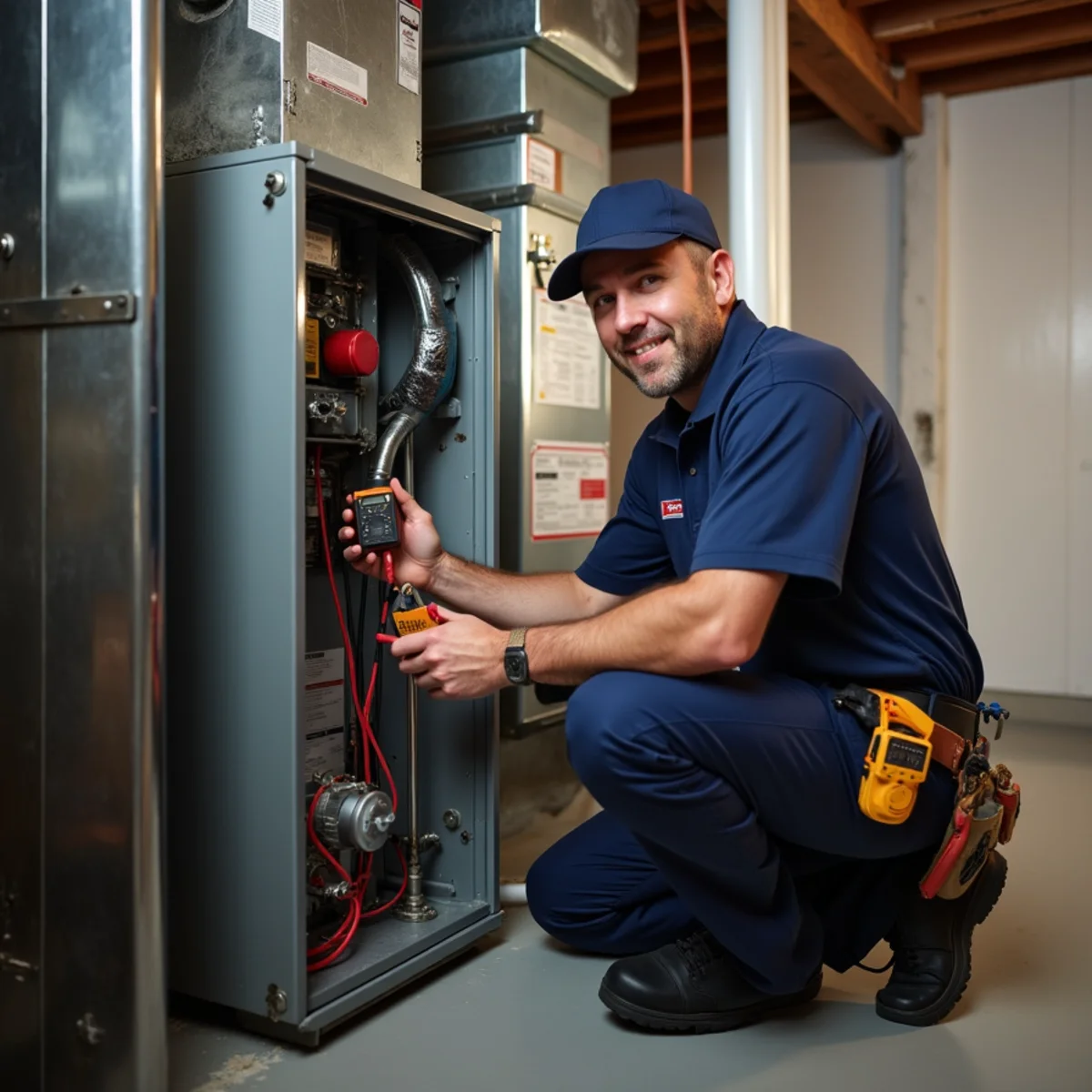
Furnace repair in Bel Air, MD by Bynum Run Air Experts provides prompt, 24/7 heating diagnostics and emergency repairs for natural gas, propane, and electric heating systems across Harford County. When your furnace blows cold air, fails to ignite, or short-cycles in sub-freezing winter weather, our Maryland licensed technicians arrive in fully equipped mobile units to replace hot surface igniters, clean flame sensors, clear pressure switches, and verify heat exchanger safety with upfront flat-rate pricing before work begins.
When winter settles into Harford County and temperatures plunge toward January averages of 25.3°F, a reliable furnace is essential for home safety. Roughly 48% of homes in the Bel Air area heat with utility natural gas, while many others rely on electric furnaces or propane systems.
Waking up to a freezing home, hearing your furnace click repeatedly without igniting, or feeling cold air draft from your floor registers requires immediate attention. Bynum Run Air Experts provides 24/7 furnace repair across Bel Air, Forest Hill, Fallston, and Aberdeen. We diagnose ignition sequences, clean flame sensors, test blower circuits, and provide upfront pricing before any repair begins.
Furnace problems we repair
Modern residential furnaces rely on intricate safety interlocks and electronic controls. A single malfunction in the ignition chain prevents the system from generating heat. We diagnose and resolve all common heating failures, including hot surface igniters that have cracked, oxidized flame sensors that fail to detect the burner flame, stuck draft inducer pressure switches, failing blower motors, and faulty control boards.
Whether your furnace is a high-efficiency condensing gas unit venting through PVC in a newer Bel Air North development or an 80% AFUE mid-efficiency furnace in a 1980s split-level, our technicians understand the operating parameters and safety tolerances required to get warm air flowing safely.
What is included in our Bel Air furnace repair service
When a heating technician from Bynum Run Air Experts arrives at your home, we perform an exhaustive diagnostic inspection covering combustion, electrical controls, and safety limit switches:
Specific deliverables included in our residential furnace diagnostic & repair service:
- Combustion safety & draft testing: flue gas draft verification, venting integrity check, and visual inspection of burner flame characteristics
- Electronic ignition diagnostics: hot surface igniter electrical resistance measurement and microamp flame sensor rectification testing
- Safety limit switch verification: high-temperature limit switch testing, roll-out sensor inspection, and inducer pressure switch differential check
- Gas valve & manifold pressure check: testing natural gas or propane manifold pressure against factory specification plate ratings
- Blower assembly evaluation: blower motor amp draw, capacitor microfarad reading, and squirrel cage wheel inspection
- Heat exchanger visual inspection: checking for visible hairline stress cracks, rust holes, and dangerous carbon monoxide escape points
- Upfront written repair quote: clear flat-rate price presented before any physical repair or part replacement begins
- Post-repair operational verification: confirming proper plenum temperature rise and monitoring a complete, stable heating cycle
No heat? What to check before you call (thermostat, filter, switch, breaker)
Before scheduling an emergency service call, there are four safe homeowner checks that frequently resolve simple no-heat situations:
Step-by-step pre-call furnace troubleshooting:
- Thermostat mode & batteries: Verify the thermostat is set to HEAT, the temperature target is set at least 3 degrees above room temperature, and replace dead display batteries.
- Furnace power switch: Check the standard wall switch located on or adjacent to the furnace cabinet. It is easily bumped into the "OFF" position during storage or cleaning.
- Furnace air filter: A filter coated in pet hair and dust restricts return air, triggering high-temperature limit safety switches that shut off the gas valve.
- Electrical circuit breaker: Inspect your electrical panel for a tripped single-pole breaker controlling the heating circuit and reset it once.
Ignition and flame sensor failures on gas furnaces
The most frequent service call on natural gas furnaces in Bel Air involves ignition failure. When the thermostat calls for heat, the control board energizes the draft inducer motor, closes the pressure switch, and supplies voltage to the hot surface igniter (HSI). Once the igniter glows cherry red, the gas valve opens, and the burners ignite.
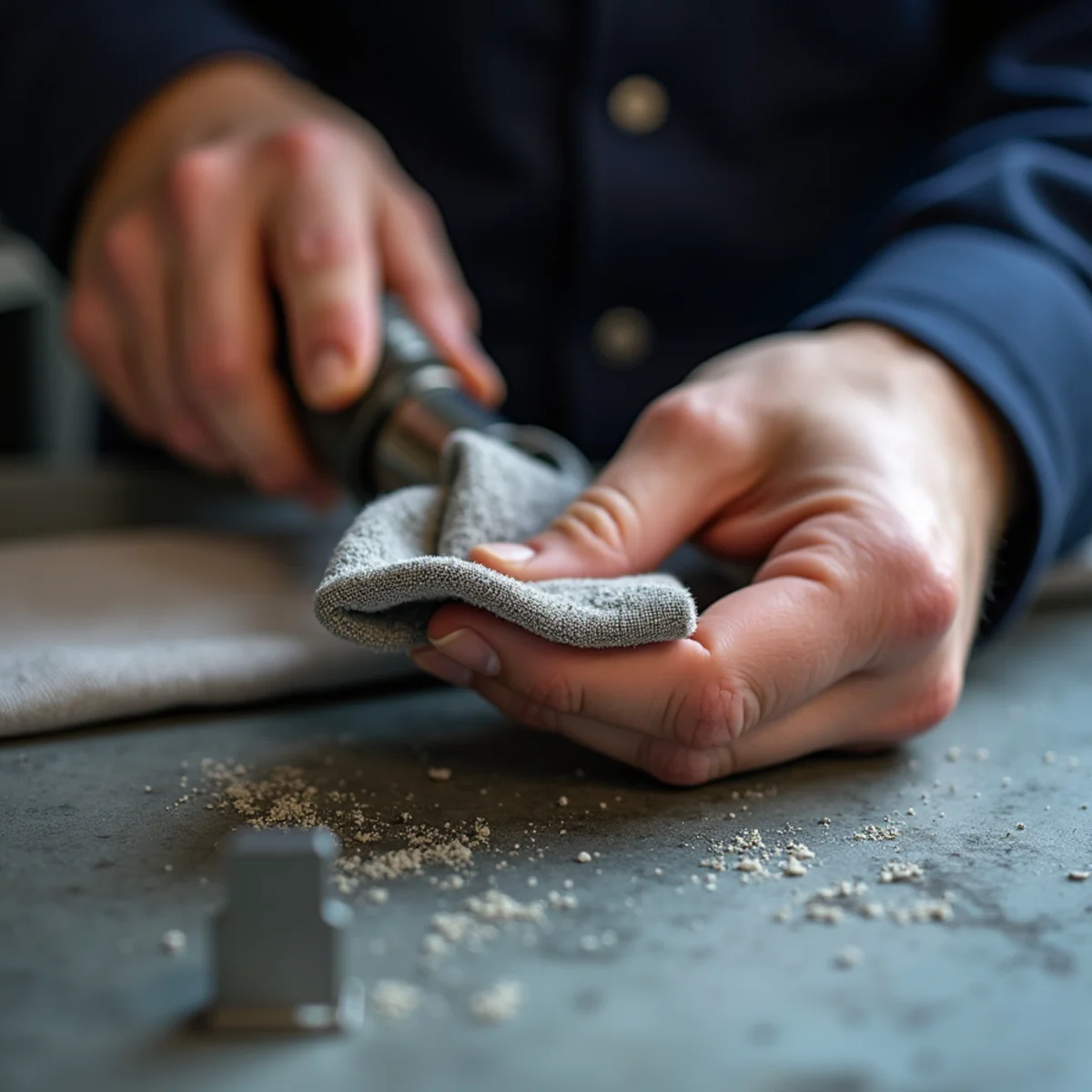
A slender metal rod known as the flame sensor sits directly in the burner flame. It uses a microamp rectification signal to prove to the control board that fire is present. Over time, microscopic carbon oxidation coats the sensor rod. The control board cannot detect the flame signal, so it shuts off the gas valve after 3 to 5 seconds to prevent unburned gas buildup. Gently cleaning the rod or replacing a brittle silicon nitride igniter quickly restores heat.
Short cycling, blower motors and tripped limit switches
Does your furnace start up, run for 2 or 3 minutes, shut off, and then repeat the process over and over? This behavior is known as short cycling. The primary culprit is overheating caused by inadequate airflow. When air cannot carry away the heat produced inside the heat exchanger, the primary high-limit switch trips to prevent metal failure.
Short cycling can also stem from a failing multi-speed blower motor, a weakened capacitor on the blower wheel, a restricted return air grille, or closed supply registers. Continual short cycling puts immense stress on the heat exchanger, eventually leading to metal fatigue and costly cracks.
Cracked heat exchangers and carbon monoxide: when a furnace has to stay off
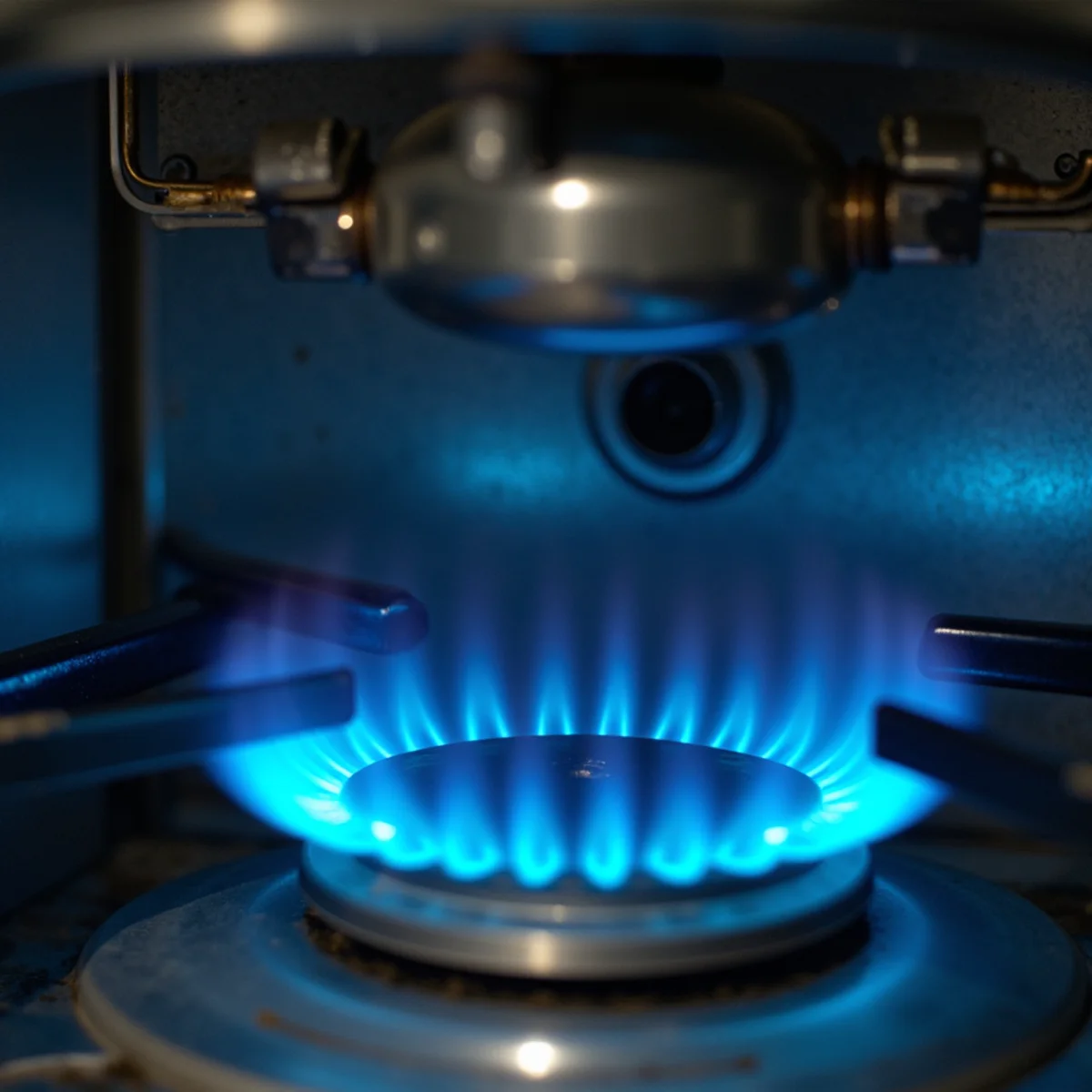
The heat exchanger is the metal barrier separating combustion gases (which contain deadly, odorless carbon monoxide) from the breathable air circulating through your living spaces. Over 15 to 25 years of heating seasons, metal expansion and contraction can cause hairline stress cracks or rust perforations in the heat exchanger cells.
If our technician detects a cracked heat exchanger during a diagnostic inspection or visual borescope check, Maryland safety standards and manufacturer protocols require the gas supply to the equipment to be red-tagged and shut off. A cracked heat exchanger cannot be welded or patched; it must be replaced under warranty or the entire furnace replaced to guarantee family safety.
Our 4-step furnace diagnostic and repair process
Step 1: 24/7 Heating Emergency Dispatch — Call our Bel Air dispatch team day or night. We confirm your heating symptoms and dispatch the nearest licensed HVAC technician to your home, typically within 10 to 35 minutes across Harford County.
Step 2: Systematic Safety & Electrical Inspection — Your technician tests safety limits, igniter resistance, flame rectification current, and inducer pressure switch operation to isolate the failure precisely.
Step 3: Upfront Written Flat-Rate Pricing — Before any replacement part is installed, we present a straightforward written quote with guaranteed flat pricing so there are never surprises.
Step 4: Immediate Mobile Repair & Safety Re-Commissioning — Most repairs are completed immediately from our fully stocked mobile parts inventory. After repair, we test temperature rise across the plenum and verify safe combustion draft before signing off.
Gas furnaces in Bel Air's 1980s and 1990s subdivisions: what fails at 20 to 30 years
Many neighborhoods in Bel Air South, Emmorton, and Fallston were developed during the 1980s and 1990s. The furnaces installed in these homes are frequently reaching 20 to 30 years of age. At this stage in an equipment lifespan, mechanical failures accelerate.
Inducer fan housing assemblies crack, draft motor bearings squeal, gas valves stick, and original control boards suffer cold solder joints. If your system is over 20 years old and facing multiple repairs, our technicians provide an objective assessment of replacement efficiency gains — such as moving from 80% efficiency to 96% high-efficiency condensing heat — versus continuous patch repairs.
Repair or replace an aging furnace
Deciding whether to repair an older furnace depends on three key criteria: the age of the unit, the safety of the heat exchanger, and the cumulative cost of ongoing repairs. If a repair involves an inexpensive flame sensor, igniter, or pressure switch on an otherwise sound furnace, repair is almost always the right call.
However, when facing a major blower motor failure, cracked heat exchanger, or obsolete gas valve on a 18+ year-old unit, investing 30% to 50% of the cost of a new furnace into an aging appliance is poor economics. We walk you through realistic payback periods and efficiency comparisons without sales pressure.
What affects furnace repair cost
Published third-party repair estimates for furnaces in Bel Air range from $125 to $1,500+. Minor electrical adjustments and sensor cleanings fall near the lower end, while motor replacements and gas valve rebuilds represent higher-tier repairs. Total costs depend on part availability, fuel type (natural gas, LP propane, or electric strip elements), and whether after-hours emergency dispatch is required.
Why Choose Bynum Run Air Experts for Furnace Repair
When you contact Bynum Run Air Experts, you get prompt local dispatch, Master-licensed accountability, and honest flat-rate pricing before work begins.
Every HVAC technician we send is licensed and insured in Maryland. Fully covered by liability protection for residential and light commercial systems.
You receive a clear written price quote after thorough system diagnostics. No hidden hourly fees, travel markups, or billing surprises.
Our mobile units carry universal capacitors, contactors, flame sensors, fan motors, and control boards to resolve most issues on the first visit.
Available around the clock for heating and cooling emergencies. We dispatch from Bel Air to reach any Harford County neighborhood in 10–35 minutes.
Local Harford County Service Coverage
From our central dispatch hub in Bel Air, our certified technicians provide fast, dependable furnace repair across the region. We regularly service residential communities and commercial properties in Abingdon, Forest Hill, Fallston, Edgewood, Aberdeen, Joppatowne, and Havre de Grace. Whether you need immediate emergency diagnostics or scheduled seasonal maintenance, our local teams arrive equipped to restore your comfort quickly.
Where We Provide Furnace Repair
Dispatched from Bel Air across Harford County, reaching you in 10 to 35 minutes.
Need service outside these primary towns? We also serve street addresses in Churchville, Darlington, Street, and White Hall.
(321) 478-0693Furnace Repair in Bel Air, MD: Frequently Asked Questions
Clear, honest answers about equipment repairs, maintenance, warranty, and Harford County utility requirements.
Why is my furnace running but blowing cold air?
When a furnace blows cold air, the blower fan is operating but the burners have failed to ignite or stayed lit. This is commonly caused by an oxidized flame sensor, a cracked hot-surface igniter, a tripped high-limit switch, or an electronic ignition lockout.
Is a burning or gas smell from the furnace an emergency?
If you smell raw natural gas or rotten egg odor (mercaptan), it is an immediate emergency: evacuate all occupants, leave doors open, do not touch electrical switches, and call BGE or 911 from outside. A light dusty odor during the very first heating cycle of autumn is normal as dust burns off the heat exchanger, but persistent burning smells warrant shutting power off and calling for service.
How long does a gas furnace last in Maryland?
With annual preventive tune-ups and regular filter changes, a residential gas furnace in Harford County typically lasts 15 to 20 years. Units operating with dirty filters or oversized duct restrictions tend to fail earlier due to chronic heat exchanger stress.
Can you repair a furnace at night or on a weekend?
Yes. Bynum Run Air Experts operates 24 hours a day, 7 days a week, including weekends and holidays. When outdoor temperatures drop into freezing territory, our emergency dispatch sends technicians equipped with common universal replacement parts.
What should I do if my furnace is short cycling every few minutes?
Turn the furnace off at the thermostat and inspect your air filter immediately. A dust-clogged filter chokes airflow, causing the heat exchanger to overheat and trip the high-limit safety switch. If replacing the filter does not solve the short cycling, call our technicians to test the blower capacitor, limit switch, and flue draft pressure.
How can I tell if my heating issue is the thermostat or the furnace itself?
Check if the thermostat display is lit and responsiveness to temperature adjustments (set 3 degrees above room temperature). If you hear a click at the thermostat but nothing happens at the furnace, check the furnace service switch and circuit breaker. If the furnace clicks, hums, or starts its draft fan but fails to produce warm air, the issue is inside the furnace ignition or safety sequence.
Have a specific question about your HVAC system?
Helpful Harford County HVAC Resources & Related Services
Not Urgent? Request an Appointment or Estimate
Prefer to schedule a replacement estimate or future tune-up? Fill out the form below, or call our 24/7 team directly at (321) 478-0693.
Not urgent? Send a request
For the fastest help, call (321) 478-0693. For replacement estimates and planned service, use this form.