
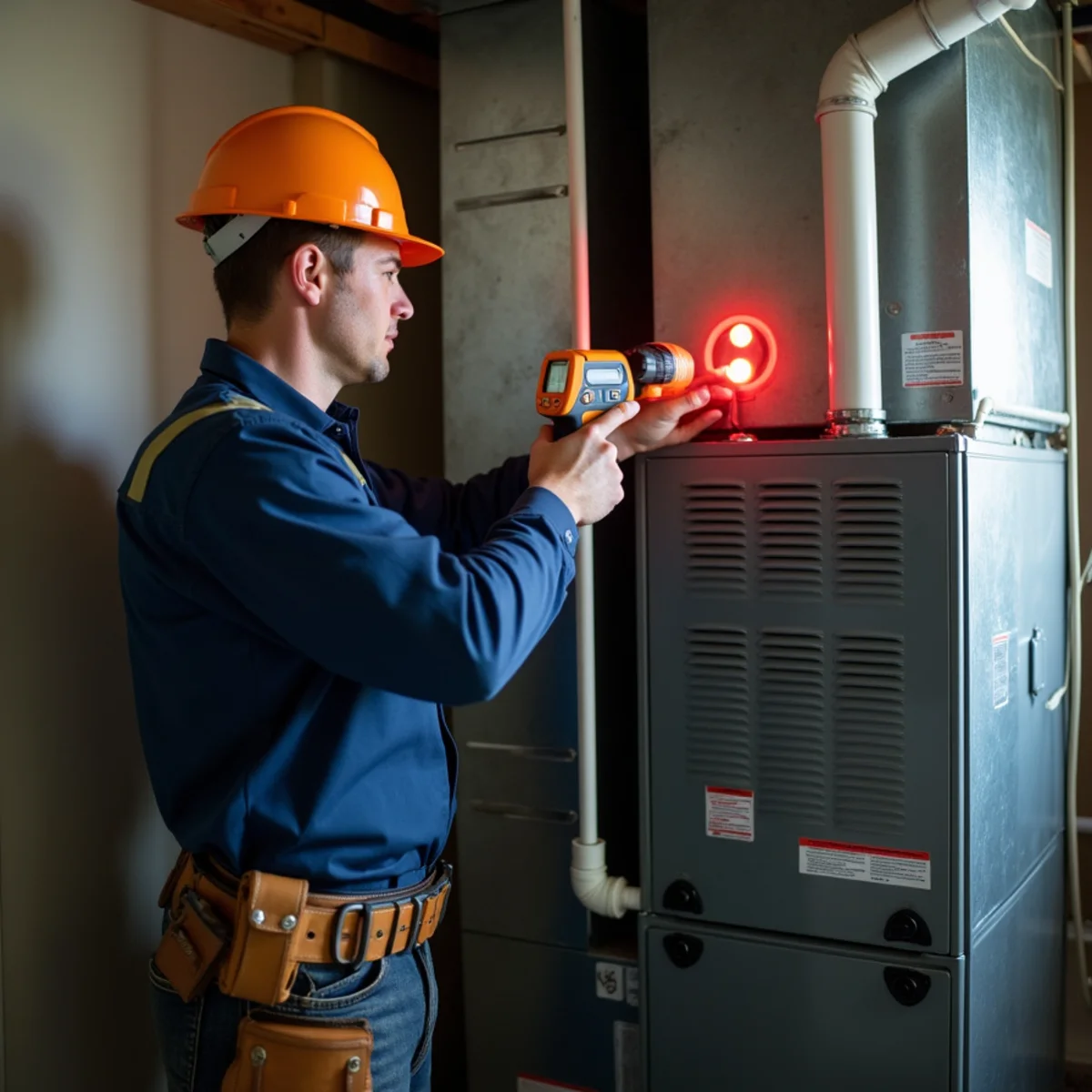
When a furnace runs for only 2 or 3 minutes before shutting down, it is short cycling. The most common causes are an overheating heat exchanger triggered by a clogged air filter, an improperly calibrated or poorly located thermostat, an oversized furnace that heats the home too quickly, a faulty flame sensor shutting off the gas valve, or a restricted exhaust flue tripping draft pressure switches. Replacing your air filter is the first step; if cycling continues, call for professional diagnosis.
What is short cycling and why rapid on-off cycles damage your furnace
Under normal winter conditions in Bel Air and Harford County, a properly sized gas or oil furnace runs for 10 to 20 minutes per cycle, producing a steady blanket of warmth that evenly satisfies every room before cycling off for 10 to 15 minutes. When a furnace fires up, runs for only 2 to 4 minutes, and abruptly shuts down—only to repeat the process a few minutes later—it is suffering from short cycling.
Chronic short cycling wreaks havoc on mechanical components. Every ignition cycle subjects the silicon nitride hot surface igniter (HSI) to 2,000°F thermal shocks, strains the draft inducer motor capacitor, and causes extreme expansion and contraction fatigue across the steel heat exchanger, which eventually leads to cracked cells and lethal carbon monoxide hazards.
The primary culprit: overheating and the high-limit switch safety trip
By far the most frequent cause of short cycling is heat exchanger overheating. Furnaces are engineered with an automatic high-limit switch—a bimetallic thermal sensor that constantly measures plenum air temperature.
If airflow through the furnace is restricted, heat builds up rapidly inside the cabinet. When the plenum temperature crosses safety thresholds (typically between 170°F and 200°F), the high-limit switch snaps open, instantly killing power to the gas valve while forcing the blower fan to run continuously to dissipate heat. Once the chamber cools down, the switch resets and the burners relight, creating an endless cycle of overheating and shutdown.
Common airflow restrictions that trip the high-limit switch:
- Clogged Air Filters: A heavy layer of dust and dander starves the heat exchanger of air.
- Closed or Obstructed Supply Registers: Closing dampers in more than 20% of the house spikes plenum static pressure.
- Dirty Blower Fan Blades: Dust buildup on curved impeller fins reduces air velocity by up to 35%.
- Undersized Return Air Grilles: Insufficient return ductwork chokes intake air volume.
Dirty flame sensors and microamp rectification failure
Another prevalent trigger of rapid furnace shutdowns is a fouled flame sensor. The flame sensor is a thin metal rod positioned directly in the path of the burner flame. Modern furnaces use flame rectification: when gas ignites, the burner flame ionizes air molecules, allowing a tiny DC electrical current (typically 1.5 to 5.0 microamps) to flow from the sensor rod to ground.
Over seasons of burning fuel, a non-conductive microscopic film of carbon, silica, and oxidation coats the rod. If the control board does not detect at least 1.0 microamp within 4 seconds of ignition, it assumes the burners failed to light and shuts off the gas valve as an explosion-prevention safety measure.
Flue venting obstructions, pressure switch faults, and condensate trap clogs
High-efficiency condensing furnaces (90%+ AFUE) produce acidic condensate water and vent exhaust gases through PVC pipes. If bird nests, snow, or leaves obstruct the outdoor PVC exhaust terminal, or if the internal condensate trap fills with sediment, the pressure switch detects insufficient draft.
When negative draft pressure drops below calibrated inches of water column (W.C.), the pressure switch opens its electrical contacts and immediately halts combustion.
The equipment sizing trap: why bigger is NOT better for Maryland furnaces
Many older homes in Fallston, Forest Hill, and Aberdeen have drastically oversized furnaces. A contractor might have installed a 100,000 BTU unit in a 1,800-square-foot home that actually only required 60,000 BTUs under ACCA Manual J calculations.
An oversized furnace acts like a mechanical sledgehammer: it dumps enormous heat into the supply ducts within 3 minutes, satisfying the thermostat near the hallway before distant bedrooms have received any warm air. The system shuts off, the temperature swings wildly, and efficiency drops through the floor.
Frequently Asked Questions
Quick answers based on Harford County equipment and climate realities.
Can an oversized furnace cause short cycling?
Yes, absolutely. A furnace that is too large for your home generates excessive heat too quickly. It satisfies the thermostat in 3 to 5 minutes before warm air can circulate evenly to perimeter rooms, causing rapid on-and-off cycling, cold drafty bedrooms, and excessive wear on mechanical components.
How many times an hour should a normal furnace turn on and off?
In typical winter conditions (30°F to 40°F outdoors in Harford County), a properly sized furnace should cycle between 2 and 4 times per hour, running for 10 to 20 minutes per cycle. If your furnace is starting and stopping 6 to 10+ times an hour, it is short cycling.
Can I clean my furnace flame sensor myself?
If you are comfortable shutting off main electrical power to the furnace, you can remove the single mounting screw, gently pull out the flame sensor rod, and buff off oxidation using fine emery cloth or an abrasive scouring pad. Never use sandpaper, as silica residue will melt onto the rod. If you are unsure, have a licensed technician service it during seasonal maintenance.
What does the blinking LED error light on my furnace circuit board mean?
Most modern furnace control boards feature a diagnostic LED light visible through a small sight glass on the blower door. The number of flashes (e.g., 3 flashes for a pressure switch open, 4 flashes for a high-limit trip) corresponds to a diagnostic chart printed inside the service panel, pointing directly to the root cause of the shutdown.
Have a specific question about your HVAC system?
Related Bel Air HVAC Services & Coverage Areas
Have Questions About Your Heating or Cooling System?
Speak directly with a local dispatcher who knows Harford County equipment, fuel lines, and climate requirements.
Bynum Run Air Experts
Serving Bel Air, MD 21014 and nearby areas
Open 24 hours, 7 days a week